Previous

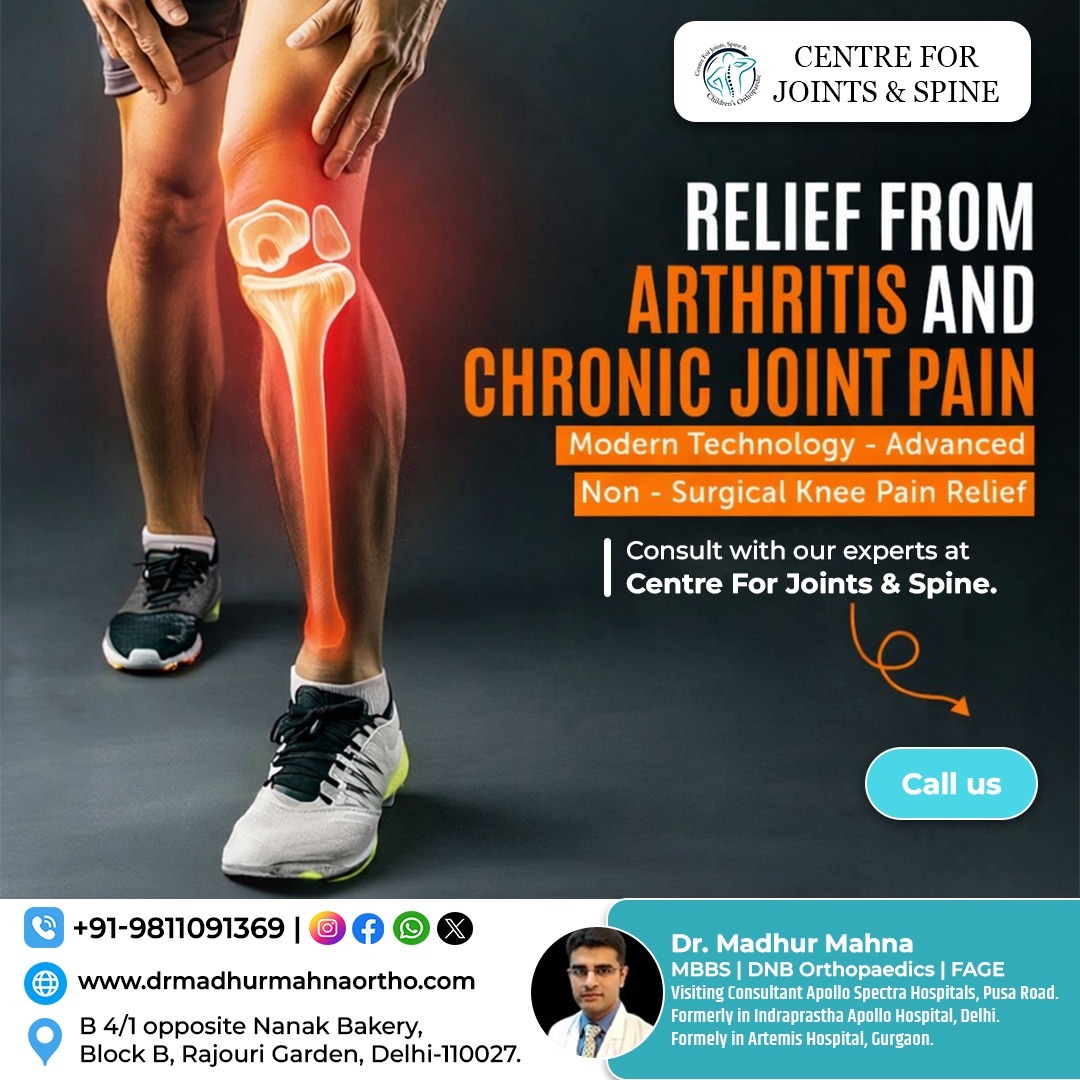
Your knee starts hurting whenever you climb stairs. At first, you ignore it. Then you avoid long walks, stop playing your favourite sport and start thinking twice before getting up from a chair.
This is how many orthopaedic problems begin—not with dramatic pain, but with small changes that slowly become part of your daily routine.
The bigger mistake is assuming that pain is simply something you have to live with. Persistent joint, bone or muscle problems deserve proper evaluation, especially when they start affecting the way you move.
An orthopaedic doctor diagnoses and treats conditions affecting the musculoskeletal system—the bones, joints, muscles, ligaments and tendons that help you move.
Patients commonly seek orthopaedic care for knee pain, shoulder problems, arthritis, sports injuries, fractures, back and neck problems, hip pain and difficulty with movement.
Treatment does not always mean surgery. Depending on the condition, your doctor may recommend medicines, physiotherapy, exercises, activity changes, injections or surgery.
You don't have to wait until the pain becomes unbearable.
Consider seeing an orthopaedic doctor when:
Pain continues for several weeks.
A joint repeatedly swells or feels stiff.
You struggle to walk, climb stairs or perform normal activities.
Your joint feels unstable or gives way.
Pain keeps returning after temporary relief.
You have difficulty moving a shoulder, knee, hip or other joint.
You have suffered an injury or fall.
You notice weakness following an injury.
After a serious accident, suspected fracture, major swelling, visible deformity or inability to put weight on a limb, prompt medical assessment is more important than waiting for the problem to settle.
This is one of the most practical pieces of advice we give patients.
People often receive an MRI report, search every medical term on Google and arrive at the conclusion that they need surgery.
An imaging report is useful, but it is only one part of the diagnosis. Your symptoms, physical examination, age, activity level and overall health all matter.
For example, an abnormal finding on an MRI may not always be the actual reason for your pain. Treating a scan instead of treating the patient can lead to unnecessary worry and sometimes unnecessary treatment.
When patients search for the Best Orthopaedic Doctor in Ramesh Nagar, they often compare ratings, experience and consultation fees.
Those details can help, but they shouldn't be your entire decision.
A good consultation should leave you understanding what may be causing the problem and what the next step is.
You should feel comfortable asking, "What happens if I don't have surgery?" or "Can physiotherapy help?"
A responsible doctor considers the complete treatment journey.
If conservative treatment is appropriate, it should be explained. If surgery is necessary, you should understand why, what it aims to achieve and what recovery may involve.
Orthopaedics covers a wide range of conditions. A doctor experienced in joint problems may approach a knee complaint differently from a specialist focused mainly on trauma or sports injuries.
The most relevant experience is the experience that matches your condition.
We have seen patients come in after months of managing knee pain with occasional painkillers.
One such common scenario is a middle-aged patient who has gradually stopped walking long distances because of discomfort. Instead of immediately assuming that joint replacement is required, the first step is a detailed assessment.
Sometimes the treatment plan involves strengthening exercises, physiotherapy, weight management and medication. In other cases, if the joint damage is advanced and symptoms seriously affect quality of life, surgery may be discussed.
The important result is not simply "surgery avoided." The real goal is helping the patient make the right decision for their condition.
Here's something patients may not expect us to say.
The most popular orthopaedic doctor isn't automatically the best doctor for you.
A large number of reviews can tell you something about patient experience, but it doesn't tell you whether a particular doctor is the right fit for your specific problem.
A better question is: Does this doctor have experience with my condition, explain my options clearly and give me realistic expectations?
Popularity is useful information. It shouldn't replace clinical fit.
Many musculoskeletal problems become harder to manage when people continue ignoring them.
A patient with recurring instability may keep changing their activities to avoid discomfort. Someone with arthritis may gradually become less active because movement hurts. After months or years, rebuilding strength and confidence can become more difficult.
Early assessment doesn't necessarily mean aggressive treatment.
Sometimes the biggest benefit is simply knowing what is happening and what you can safely do next.
You can make your consultation more useful by preparing a few basic details.
Write down when the pain started, what makes it worse, whether there was an injury and what treatments you've already tried.
If you have previous X-rays, MRI scans, prescriptions or medical reports, take them along. Also mention any medicines you regularly use.
These small details can help your doctor understand the complete picture instead of looking at one symptom in isolation.
Dr Madhur Mahna is an orthopaedic surgeon associated with care for joint, sports injury and arthritis-related concerns. For patients considering consultation, the focus should be on an accurate assessment, practical treatment choices and a plan suited to their individual condition rather than automatically choosing surgery.
An orthopaedic doctor treats problems involving bones, joints, muscles, ligaments and tendons. Common concerns include arthritis, knee and shoulder pain, fractures, sports injuries, hip problems and movement difficulties.
Consider an appointment when pain persists, keeps returning, causes swelling or stiffness, or begins affecting walking, work, sleep or other everyday activities.
No. Depending on your diagnosis, treatment may include physiotherapy, exercise, medication, activity changes or other non-surgical options. Surgery is considered when it is medically appropriate and the expected benefits justify it.
Pain that keeps coming back is worth investigating. You don't need to wait until a joint stops working properly before seeking professional advice.
If pain, stiffness, swelling or reduced movement is affecting your routine, schedule an orthopaedic consultation, bring your previous reports and ask for a clear explanation of your treatment options.


